Thursday, June 4, 2020

Readymade asset allocation products - should investors use these?

The purpose of this post:

  • Is NOT to compare between different types of funds.
  • Is only to reinforce my point that asset allocation must be continued even if our moods change from extremely negative to very positive. It is my experience that you will get a better result sticking to an asset allocation
  • Is to make a point that products offered by mutual funds should not be written off just because some on social media criticize. Study for yourself and drop or accept a product.

That said...

"The most important key to successful investing can be summed up in just two words-asset allocation." ~ Michael LeBoeuf. I’ve been tweeting on this often. I often receive DMs and messages on various funds which offer asset allocation and whether they will be useful for retail investors. More often queries come because investors affected by criticism of everything on twitter and unfortunately retail investors get carried with this and make stupid decisions. Having received too many queries, I give here, a small note and start by saying – Do not reject anything unless you have analysed it yourself or tried and found it not suitable. What is useless for others may be good for you!!!

A small note on 2 of the common asset allocation products offered by mutual funds: I answer actual queries received.

AGGRESIVE HYBRID FUNDS:

These funds are designed in such a way that you have > 65% in equity to get the status of an equity fund. More often than not we find that the equity:debt ratio is closer to 75:25. So for an aggressive equity:debt allocation – a static non changing allocation, these are available.

So, why invest in these?

If you want a static asset allocation of about 70:30 in equity:debt. The debt part will protect against very heavy drawdowns. This ensures automatic tax efficient rebalancing. That is, when equity markets rise, equity will be sold off and when equity markets fall, debt will reduced and equity part increased to maintain the asset allocation. In a bull market a 100% equity allocation will far outperform and we as investors get carried away and do not protect our portfolios. A March 2020 like drawdown teaches us great lessons.

Any precautions I should take?

YES!! Two very important points to note. First, I would go for a fund that predominantly invests in large caps. Adventurism into small and mid caps has hurt some funds. Second, be aware of the debt part of the portfolio – it should have familiar sounding high quality paper. Many avaiable funds do follow the above guidelines.

So, did these really protect in the recent steep fall in equity prices??

Good question. Many of these funds which follow the above rules did protect. At one time benchmark indices were down >30% from highs. Below is a graph of 3 funds compared to a Nifty 50 Fund. The point is NOT to compare performance, but a simple visual representation to show that having asset allocation will protect you when there are big drawdowns and your portfolio will end up doing better if you maintain discipline in asset allocation. March 2020 was an eye opener.


So, why so much criticism on social media?

The one really jarring note about these is that when markets boomed after demonetisation, these were missold as alternatives to FDs and bought for monthly or quarterly dividends. That IS NOT the reason to invest in these. Another issue is that some fund houses may not have the highest quality debt in their hybrid funds. Recently fund houses which transferred papers from their credit risk funds to their hybrid funds caused great concern and received criticism. Be aware of shenanigans.

Your final take?

As long as you consider the above points- look for a stable large cap based portfolio and quality debt, I believe these have a place in investor portfolios. Note, in a raging bull market, a portfolio of 100% equity will far out perform. But, markets move in cycles. And it is my conviction that asset allocation ensures a better outcome for your portfolio! How you do it is your call.

Final point – know why you are investing in these – NOT for a monthly dividend, but for maintaining a static, aggresive asset allocation. Remember, stick to funds investing in larger caps.

The other popular hybrid product fund houses offer:

Dynamic Equity funds:

Unlike the above Aggressive Hybrid Equity Funds, these as the name goes – dynamically shift the equity and debt portions. The equity position can fluctuate between 20% to 80% depending on the model used by the fund. These are also popularly known as Balanced Advantage Funds! These are much more conservative than the aggressive hybrid equity funds.

So how do these work?

I can write a full post on these, but in brief, based on either a valuation model or a trend following model, the equity part of the portfolio will dynamically change according to the market conditions. So, in the last few years, I have seen the equity part of some such schemes go from 20% to 65% or maybe more.

Any example of how equity levels changed in a fund?

Yes, I just saw some data put up by a fund house on how the equity allocation has changed dynamically at various NIFTY levels and the table is shared below


An interesting comment I received:

Some on social media emphasize that we should do our own allocation and talk down these. What should I do?

Answer: They have their own systems and ideas and even though brilliant, their methods may or may not be suitable to you. Try out your own model. AMCs offer a readymade dynamic model and have been true to their models in most cases. It is up to you to see if they work for you. If you are a conservative investor there may be a place for a type of product which can do unemotional investing – buying low when things are bad while selling high when things are good. And do this in disciplined manner over and over again. Or we have the other type of Dynamic Fund which consistently aims to maintain higher equity levels when markets are going up and vice versa. Try for yourself.

The below graph shows how they contained the drawdown in March.


By and large, these funds have served a conservative investor well. It is important to note that the return expectation from these funds should be tempered. With so much debt and arbitrage positions, they are by nature defensive. These are not alternatives to FDs and these too have been missold for monthly/quarterly dividends.

Caution!

When investing in these you have to ensure that the fund house follows it model. One large fund house has such a scheme and disregards dynamic rules and uses it as an aggressive fund. That has not protected investors.


There are other types of hybrid funds becoming popular – multi asset funds which have gained popularity after the run up in gold. More about these at some other time.

In conclusion, this fall in stock prices has showed us how essential it is to have an asset allocation. Not all will use readymade asset allocation models like the hybrid funds AMCs offer. However, you decide for yourself. What is important is that you look more deeply at asset allocation and use your own model or a readymade investment product.


Monday, May 25, 2020

4 expensive misadventures in investing

Markets have seen steep falls since the Covid 19 lockdown.

I shared my thoughts with Larissa Fernand on errors and misadventures that can destroy portfolios, based on queries I've been receiving from investors since March. These were published in The Morningstar 

4 expensive misadventures in investing 

Based on interactions with clients, friends and acquaintances, MAHESH MIRPURI recently tweeted about what is going on in the minds of investors. 

Being a financial coach and adviser, he neatly put it across as misadventures in investing. Here he fleshes out the points to caution investors on how to be wise in such uncertain times. 

Here is something that you must know: You can gain substantially in your portfolio by avoiding mistakes. Win, by not losing. Skip these misadventures, and you are automatically ahead in the game. In fact, it is more crucial to avoid certain errors, than hunt for the “best” instrument.


The misadventure: Ignoring risk when chasing a higher yield. 

The Reserve Bank of India recently lowered its repo rate to 4%, and the reverse repo rate to 3.35%. 

The repo rate is the rate at which the RBI lends to other banks. The reverse repo rate is the rate at which the RBI borrows from banks.These are the benchmark rates in the economy, which means that these as such, form a basis for all other interest rates. 

Worth noting is that these are the lowest rates we have had since 2000. With India facing an economic downturn, the rates may not rise soon. Banks have consequently dropped lending and fixed deposit rates and this has made senior citizens anxious. 

To compensate, investors are now looking at instruments that offer a higher return, choosing to ignore the risk of losing capital. Senior citizens have enquired about Company FDs, NCDs and other instruments which carry a risk of losing capital. 

Please consider safety of capital more especially, at this critical time like this. Senior citizens can consider the Senior Citizens Savings Scheme @7.4% or RBI Taxable Bonds @ 7.75% or the Pradhan Mantri Vaya Vandana Yojana – a pension scheme.  A host of other small savings schemes are also available.

 The misadventure: Playing the guessing game. 

I keep getting calls or requests for advice on whether a stock is a good buy at a particular price. "Stock ABC was Rs 500. Today, it is quoting at Rs 350. Should I buy?” 

I answer such queries by posing another question: What is your anchor? 

Let me explain. We don’t realize how dominant the anchoring bias is. This is when our brain unconsciously seeks a reference or starting point when guessing an answer. 

Let’s say I began to track a stock when it was Rs 3,000. Now that it has dropped to Rs 2,000, I believe it is cheap. But is it? To really figure out if it is cheap, you must study the stock in detail. Maybe it is still expensive at Rs 2,000. Maybe it was cheap at Rs 3,000 and is cheaper still. And if that is the case, why is it falling so rapidly? Is there a reason it is plunging faster than other players in the same sector? 

Don’t rush to buy because your mind is anchored to a previous price. Study. Analyse. Don’t guess.

 The misadventure: Betting recklessly. 

After Demonetisation, it was a dream run for the Indian stock market.  

The Sensex stood at 27,591 on November 8, 2016. As millions of investors channelized their money into equity funds since interest rates dropped substantially, there was a phenomenal rally – and spectacular gains in small and mid caps. Seeing recent performance, thousands of investors poured money into small and mid cap funds and stocks, fuelling a stellar run. And while there were substantial corrections along the way, the Sensex touched an all-time high of 41,000 before this steep fall. 

The problem is that many investors flocked to the asset class with no clue as to how volatile it can be and how punishing a steep fall can be. 

To add fuel to the fire, many investors have invested a substantial part of their financial assets into equity alone. Zero respect was paid to asset allocation. Such portfolios have suffered tremendous damage.  

Never bet recklessly on one single asset. Always ensure proper asset allocation and diversification.

 The misadventure: Chasing returns.

 This has always been an investor weakness. Invest in the sector once it rallies. Invest in a fund once it tops the chart.  

A number of investors now want to bet on gilt funds. Why? Because they have put up some excellent return figures. No one considered them when yields were high. Today, when 10-year paper is at 5.96%, maximum enquiries come in for gilt funds. Why? Because investors are looking at the recent past performance, without enquiring into why!  

Agreed, gilt funds have no credit risk. There is no risk of default. But they do have interest rate risk. 

In simple language, if interest rates rise, the price of the bonds will fall. If interest rates fall, the price of the bonds will rise. Interest rates (yields on bonds) have fallen tremendously and this means bond funds have given very good gains. Now instead of chasing such funds, ponder, how far lower can interest rates go? 

If you wish to invest in gilt funds, understand the offering and consider it as a tactical play. I have written about it in How to build a debt portfolio. 

Investing simply based on recent performance can turn out to be a misadventure. 

In conclusion, to avoid the mistakes enumerated above, develop a deliberate and thoughtful investment process and stick by it. You will be well on your way to having a good investment portfolio. 

Wednesday, May 13, 2020

Approach to creating a debt portfolio

                                                                                                                                                           
BOND FUNDS

I wrote an article in the Morningstar and am reproducing the same here.  

Approach to creating a debt portfolio

The first step to creating any portfolio, is to decide on the equity and debt combination. The allocation to equity will rest on three factors: when you need the money, an honest appraisal of your capability for risk, and the volatility you can stomach.

When it comes to debt, there are two aspects you must never lose sight of: Safety and Liquidity.I say this because the prime aim of a debt fund is capital preservation and stability to the overall portfolio. It is supposed to make it easier to stomach risk elsewhere in the portfolio. Investors can inadvertently sabotage their portfolios by trying to juice returns by adding risky debt.

It is very easy to get carried away by advice doled out of Twitter or television. Random transaction-based investing will harm you and you will end up with a lot of "junk". Never view any investment in isolation, always view it in relation to your portfolio. Once you adopt this step, then you will get investments that complement each other, at the same time, avoiding portfolio clutter and duplication.

There are three elements to consider when constructing a debt portfolio.

1.    An Emergency Fund

An emergency, by its intrinsic nature, is meant for unexpected and emergency events. Which means, you will need to use them instantly. Don’t chase returns here, keep a laser-like focus only on Liquidity and Safety. This is all that matters. I suggest  bank fixed deposits. If you want to consider mutual funds, go for liquid and ultra short-term funds. Alternatively, you can consider dividing the emergency fund amongst these options.

Liquid funds primarily invest in money market instruments like commercial paper (CP), treasury bill (T-bills) and certificate of deposit (CD) with low maturity period.

Ultra short-term funds primarily invest in liquid fixed income securities which have short-term maturities.

2.    Core Portfolio

This bucket contains the bulk of fixed income allocations and provides for a nest-egg to the overall asset allocation of an investor. The chief pursuit here is one of safety.

I suggest you layer it.

Look at assured return investments such as fixed deposits, Employee Provident Fund (EPF), Public Provident Fund (PPF), RBI bonds, and small savings schemes.

Build on this base with debt mutual funds that are low on both, duration and credit risk. Do not deviate from this rule and you will avoid credit risk and interest rate risk. The advantage of this type of debt mutual funds is that investors get the benefit of lower tax rates (if held for > 3 years) and market returns. The appreciation in these funds is not only from the accrual of interest income, but possible capital appreciation due to interest rate movements.


3.    Tactical Portfolio

This is where you can afford to be experimental and look for higher returns. To take advantage of market conditions, 15-20% of your debt allocation can be funnelled into this bucket.

Gilt funds would fit here. These funds have no credit risk or risk of default. Their risk is interest rate movements. If you expect interest rates to dip in the future, you could consider a tactical bet here.

Dynamic bond funds would fall under this category. Consider them after getting well acquainted with the fund manager’s strategy. Steer clear of funds with credit risk. 

Credit risk funds too fall in this satellite category. These funds do not even come onto my radar as I see no point in taking on risk of default and wiping out capital permanently.

Non-convertible debentures (NCD) issued by companies also fall into this category. But the risk here cannot be ignored.

A word of caution to retail investors when it comes to debt funds.

·         Start with the question: why do I need market-linked debt instruments? Once that is answered, take it forward using safety and liquidity as the two guiding posts.

·         Understand the nuances of each fund. Different types of debt funds carry different risks. The risk of a credit fund is totally different from that of a gilt fund. Gilt funds, on the other hand, are not a homogenous lot. The category has actively managed gilt funds and constant maturity gilt funds. Understand what the fund invests in and its risks.

·         When evaluating a fund, keep various factors in mind; whether it is purely open ended or a “target maturity” fund, weighted average maturity, credit quality and expense ratio.  Liquidity of the portfolio must also be considered. Your open-ended debt fund must be able to provide for liquidity in the assets that it holds. This means that when faced with redemptions it should have assets that can be liquidated and with reasonable impact costs. When selling assets, the risk profile of the remaining assets should not shoot up or be concentrated, like we have seen in the recent credit fund crisis

·         Finally, don’t invest ONLY because the past performance has been great. This is a mistake many a retail investor is susceptible to.

 If all of this seems a bit overwhelming, I suggest that you take the help of a knowledgeable guide or a financial adviser OR you can approach me.


MUTUAL FUNDS ARE SUBJECT TO MARKET RISK. PLEASE READ ALL SCHEME DOCUMENTS CAREFULLY BEFORE INVESTING


Tuesday, February 13, 2018

You cannot ignore these - Journey from Good to Great

From good to great

The recently concluded IFA Galaxy Annual Summit this year had the theme – From Good to Great. My piece was published in the Annual Souvenir. Sharing the same here.

There is a wonderful series of instructions in the Veda starting with the words - Na Pramaditavyam/ Ma Pramada (न​ प्रमदितव्यम् / मा प्रमद:​)  Simply these mean – DO NOT NEGLECT the few things listed. These injunctions are meant to ensure we live a fulfilled life. In the list, the Shruti has even mentioned – Do not neglect your well being and prosperity!


There are some traits common to every person who has achieved greatness A few things they have not neglected in life’s journey – a few things that has made the difference between good and great. These few are mentioned in the list I mentioned above and I enumerate the same here.

Do not neglect basic values – Build your profession around values:

The great stand by some values and principles. “To be truly rich, regardless of his fortune or lack of it, a man must live by his own values. If those values are not personally meaningful, then no amount of money gained can hide the emptiness of life without them.” John Paul Getty.

The basic principle around which every action is built is, “Do as you would be done by!” When you are in a position of an advisor, mentor and have relationships built on trust, there is a great responsibility to uphold that trust – at the cost of business. Have a code of honour and live by it. If you cannot be great in your own mind, it does not matter what others think.
Where there is choice, there is conflict. In such cases, your values should decide your choices as a professional.

These values should not just be taglines to our business names. They should be the principle(s) around which our entire profession is built.

Do not neglect your contribution to society:

Everyone who has achieved greatness is a contributor, more than a mere consumer. In the balance sheet of life, ensure that the contribution side is far greater than what you have received and consumed. Be intensely aware of the entire cosmic infrastructure that has supported you in life’s journey and you will feel the need to take care of it.

Contribution need not be financial only. It can be in the form of teaching or giving your time to some cause etc. Look at the world around, everything is cyclic. You receive-give, receive-give, receive-give. Let the cycle not be broken.

Contribution as a professional, is also giving back to your employer, employees, your principals and clients more in value than you receive.

Do not neglect your health - Physical, mental and intellectual health:

“The foundation of success in life is good health: that is the substratum of fortune; it is the basis of happiness.” — P.T. Barnum
When I speak about health, I refer to physical, mental and intellectual health. Everyone is aware of the need to have good physical health. My focus here is on mental health.

Work environment is competitive, ever changing and challenging. Invariably during waking hours, the mind is filled with stress, indecisiveness regarding choices and preoccupations. Mental fitness refers to calmness of mind, an ability to focus and to see things objectively. It means enjoying a mental detachment and not letting emotions rule, create havoc and affect decisions. Unchecked, powerful emotions subdue the intellect.

Every great, successful person has this mental fitness – ability to remain objective and enjoy relative calmness amidst action in the ever changing environment. He has this ability to remain in control and let the intellect work.

Some suggestions:
1.    The breath and mind are connected. Watching one’s breath is a great relaxation technique when one is stressed. Works immediately to help one calm down
2.    Take time out to watch nature and take a walk alone. This will ensure that you develop mental leisure that is so important.
3.    One trick that is useful, is to learn to “neighbourize” any situation. At times of  conflict and indecision, it would be good to watch your mind / the situation as if it were a neighbour and then respond.

Intellectual health refers to a well informed, thinking intellect. Please do not restrict learning and reading only to investment related stuff. An intellect continually sharpened by going deep into a subject, learning new things and ideating makes the difference between good and great.

While those who have achieved greatness in their fields have several other traits, I thought it fit to emphasize the above. Be mindful of the above and see  difference it makes. Wishing you greatness in your chosen path.


Sunday, December 31, 2017

#Throwback2017 General observations. Bulls, SIPs and gyani investment babas


2017 - year of the Bull

Wishing you all a very happy new year, filled with good health, success in your endeavours and a step forward to complete financial freedom.

2017 has been fantastic for equity investments and do see the chart prepared by Rajesh below.


Just wish to make a few observations:

All those who have remained in the markets since 2008 have truly gained. They have seen lows and have understood the necessity of asset allocation. They remain grounded and have taken advantage of this bull run. While, this year has been good and in fact the last 3 years have been great, investors will do well to remember years when things did not go well.

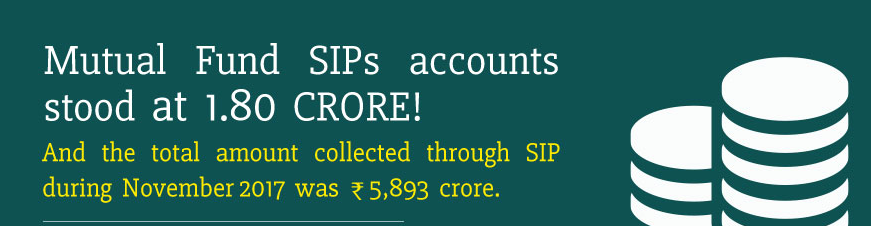
Thousands of new investors have entered the equity through mutual funds – mainly using SIP as an instrument. The industry monthly SIP book is almost 6000 crores now. SIP has been a wonderful way to enter for those who earn a salary and for those whose cash flow allows a specific sum to be invested every month. 

Source: AMFI


The one thing I can say is that simplicity scores over any complicated investment method. Salaried professionals simply have no time to look regularly at their portfolio and keep a tactical portfolio running.

There has been no dearth of social media gyani investment babas waiting for the market to crash. Some of them seem to be waiting to tell the new entrants into Mutual Funds that mutual funds sahi nahi hai!! Waiting to tell the SIPers that that SIPing does not take out risk from equity. Today also one worthy on twitter said that he was waiting for years of single digit returns so that his point was proved right! Phew!
No investor says that SIPing takes out risk from equity investing. And we know that the market will crash sometime. We SIP not because it is a risk free method of investing, but because our cash flow allows for monthly investments. It is a tool to maintain discipline and automate the saving/investment process. Using SIP does not mean not allocating to debt! IMHO the best advice is one that makes you STAY THE COURSE and stick to your investing principles. Stay the course, shut out the noise and you will do well on your path to complete financial freedom.

Equally, many gyani investment babas like only 1 or 2 particular fund houses because of their “perceived honesty” and criticize others. They have have missed out! Be open to ideas. Always be open to new ideas. Approaching investments with a closed mind is having a frog in the well approach There are some great fund houses with some great schemes and fund managers. You miss out if you do not use these to your benefit. The light blue line in the chart below is the fund with a low TER and the orange line is a NIFTY ETF. These are one year returns. These are all large cap based funds that I track. So, be open and do not miss out on good opportunities. Yes, times may change and one day we may move into an era of passive investing. Till that time comes, make the best out of active funds. Be open to changing over to passive investing too :)😁


One important point: Many will not agree with me, but I would certainly NOT neglect mid cap based funds just because they have run up a lot. More on this in a future post.
If you've remained in SIP in a mid cap fund for the last 5 years, you've surely got an XIRR of > 25% in that fund. However, keep expectations grounded.

A note on debt: Just because the last one year has not been good for debt funds, do not neglect these. The GOI 10 year bond is at 7.33% now and FD rates are at about 6.75% only for a one year FD. Rates look to be inching higher and definitely bond funds look attractive. Some of the shorter duration and accrual funds we track have all given a CAGR of > 8.5% over 3 years.

Finally a few words for 2018
  • Imbibe principles of personal finance and investing well
  • Be disciplined when it comes to working for complete financial freedom and automate the process
  • Stay the course
  • Do not procrastinate ( in cleaning up portfolio, in rebalancing to original allocation etc) 
  • Cut out the noise from financial media – learn to filter out the information you need
  • Last – take help if you need it.

Once again, wishing you all a happy, healthy and successful 2018


Mutual Funds are subject to market risk. Read all scheme related documents carefully before investing


Saturday, November 18, 2017

Cafemutual interviewed me...


Cafemutual intervewed me recently when they were looking for the most (top 3) followed mutual fund advisors on twitter. The below is what they published


Getting a loyal following on twitter is every advisor’s dream. While most advisors are yet to reach their first 1000 followers, these two IFAs have taken social media presence to a whole new level. They have not just established themselves as thought leaders but managed to get more than 10,000 followers. In this interview with Cafemutual, they reveal their unique style of tweeting.


Mahesh Mirpuri of Invest Mutual, Chennai
@invest_mutual
Followers: 11368
Joined on: July 2011
I started using Twitter before I became an IFA. I believe since Twitter is a social media, one should focus on personal interests and passions. Hence, apart from mutual funds, I post tweets on personal finance, Sanskrit and Vedanta.
In fact, in my profile description too, I have specifically mentioned this to let my followers know what type of posts to expect from me.
By sharing infographics and giving commentary on news or articles, I am able to reach out to a wide audience. In fact, many people in my Vedanta and Sanskrit lists have approached me for financial advice.
In addition, I make it a point not to give advice on Twitter. I keep it strictly for socializing. If someone asks me a mutual fund query, I encourage him or her to become my client first.
My advice to advisors is to increase interaction with people on social media. If someone has posted a tweet, reply immediately. I am never shy of replying to industry leaders, CEOs, CIOs and fund managers. By interacting with various people, I have increased my visibility. Recently, a fund manager approached me telling he recognised me from Twitter. 

Monday, October 16, 2017

Personal Finance: From darkness to light


Diwali is here and we have some really great words of wisdom from many investors and advisors on investment strategy and on behaviour patterns required to be successful in investing and reaching financial goals.

The avalanche of news articles, advertisements along with lower returns from traditional investment avenues that guarantee returns have prompted many to seek out newer products. Many of you are new, first time investors, shifting tentatively from FDs to investments that give market related (not guaranteed) returns.

The most common places for information we go to are news articles, opinion in the finance pages, TV channels. We do get some really great information from here but truly useful information is hidden among a lot of rubbish. Unfortunately much of what is bandied about is exaggerated, inappropriate and I find many getting utterly confused on what to do. More importantly, they make you feel you are missing out and lead you to hara-kiri.

Another person who freely dishes out information is that Bank “Relationship Manager”. I’ve personally never seen so many untruths being spoken as when I hear a Relationship Manager speak about an investment. His/her only relationship is with the money in your account which may have come from a matured FD.

So, what should investors do?

First – take some effort to move from darkness of ignorance of financial instruments towards the light of knowledge

Spend some time learning about various financial instruments, how they work and what you can expect. Such information does not come from the questions on in newspapers or on CNBC asking “Which is the best Fund?”. Neither will it come from WA forwards on investment tips. It requires some time to read relevant books on investments and simple financial primers explaining various instruments.

An investment in knowledge pays the best interest. This learning does not take too much time and only requires some interest and commitment on your part.

Second – seek advice and learn

While I was addressing a large group on personal finance – a group of about 80, only two persons could answer a question of mine on how a mutual fund worked. If you don’t know, it makes sense to seek advice, have someone to guide you and teach you. Your advisor, guide, financial mentor can keep you focused, impart his wisdom. Wisdom is more than just knowledge about financial instruments. As I hinted above – right at the start, your behaviour, your reaction to various events, attitude towards finances can be changed which is the most important factor in attaining financial goals.

While many of you have entered the markets for the first time in this bull run and have had a great experience  in the last four years, it is imperative that you are aware of what you are getting into and enjoy the ride, with the light of knowledge guiding you in your path to financial freedom.

I wish you all a Happy Diwali, healthy and prosperous new year and success in your journey to financial freedom.

असतो मा सद्गमय । तमसो मा ज्योतिर्गमय । मृत्योर्मा अमृतं गमय । 


Saturday, February 25, 2017

Integrated personality and success in your financial life


I met a young investor several months back wanting to make a start and he decided to invest in an ELSS scheme. He took the KYC forms and promised to get back in 2 days. Months passed and even after reminders, there was no information, till last week he called and lamented that a huge amount of TDS had been cut from his annual bonus received in the end of Jan!! (He has delayed in making the investing and did not submit proof to his HR)

Now, another investor: A young lady, at her first job discussed a plan for savings and investment last year and started with an SIP of Rs 2000.00, promising to increase SIP by Rs 10000.00 after a year. She has just come and actually made the NEW investment even though her increment was not as expected. Was truly impressed when she said that she would not let anything get in the way of the plan and would cut unnecessary expenses.

You can already guess who has a greater chance of achieving total financial freedom!! The difference in the two investors is the heading of this post – Integration of one's personality!! - Integration of the various layers of personality is a very very important factor in achieving success in ANY field let’s see how this works. First, what are the layers of personality referred to here?

Layers of personality

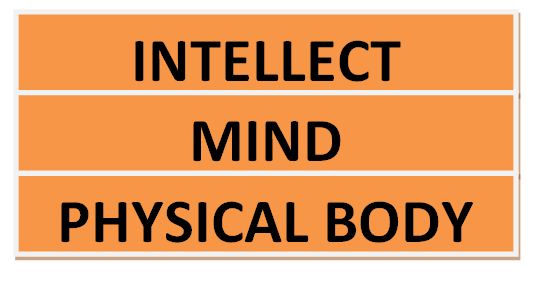
Intellectual layer: All of us individuals have an intellect (brain!!) which receives information, processes it, learns new facts, discriminates between right and not right and makes a decision. Planning, analysis, deciding processes etc are the functions of the intellect which makes decisions. So deciding on how you invest, how much to invest, planning our budgets etc. etc. are a process of the intellectual layer of our personality. (Alas, many do not fully use their intellectual abilities and just amber along, which is the subject of another post)

Now, this decision made by the intellect needs to be implemented!! In between the decision and the implementation come two more layers of our personality – our MIND (mental layer) and our BODY (physical layer of our personality). The mind is a fickle thing, has strong likes and dislikes, needs, desires, wants the easy way out (jugaad), is pulled by the various things of beauty and novelty in the world around! It is very strong and PULLS the body along with it. It is often working at a tangent different from the intellect.

To give an example, you have decided to take an early morning walk and set the alarm for 5.30 AM. The alarm goes off. Invariably the fickle, pleasure loving mind will want another 10 minutes more of sleep!! This snooze thing is a real killer and you never get up. But note what has happened. Your mind and body are opposing the decision of your intellectual layer!! Let this happen a few times and you will NEVER get up early. The same is the story with all new year resolutions!

Integration of our personality – when the intellect, mind and body are aligned

It’s easy now to see what we need to do but most difficult to implement. Integration of our personality is the complete alignment of our decisive intellects, our minds and the body. If the intellect works out a plan or even decides something small, the MIND SHOULD agree to implement without excuses and the body should be in alignment working towards our objectives, goals.  If not done, it will weaken your personality as you consistently negate yourself.

When investing, we often decide an asset allocation. If the market is shooting up wildly, see how our minds go crazy with dizzy excitement and does not implement the decision, justifying it instead - giving or making excuses!!! Looking objectively, you know this can be harmful. Many such examples can be given.

Exercises to practise: Simple methods have been given to practise integration of personality. Just make a start by being on time – ALWAYS. Being punctual is a proof of integration. Another good exercise to follow, is to positively give up some favorite food for a month and ensure that the craving mind and body follow!!

Successful living: The bottom line is to ensure that the discriminating, thinking intellect, the mind and body are in perfect alignment and harmony. Look around and see all instances of success. They did not happen purely by luck. The individuals have been decisive and with the different layers of their personality completely aligned towards their objectives. The adage – united we stand, divided we fall applies to layers of our personality. Ultimately it is we ourselves who are our own friends and our own enemies.

If you wish to invest in mutual funds through me, write to me . You can also message me on twitter @Invest_mutual

Mutual Fund investments are subject to market risk. Please read all scheme related documents carefully before investing.